The Polished-Draft Trap: Why Editing Too Early Can Shrink an Idea
Editing too early can make an idea smaller before its point is clear. Separate drafting from revision so you can develop the thought before polishing its wording.
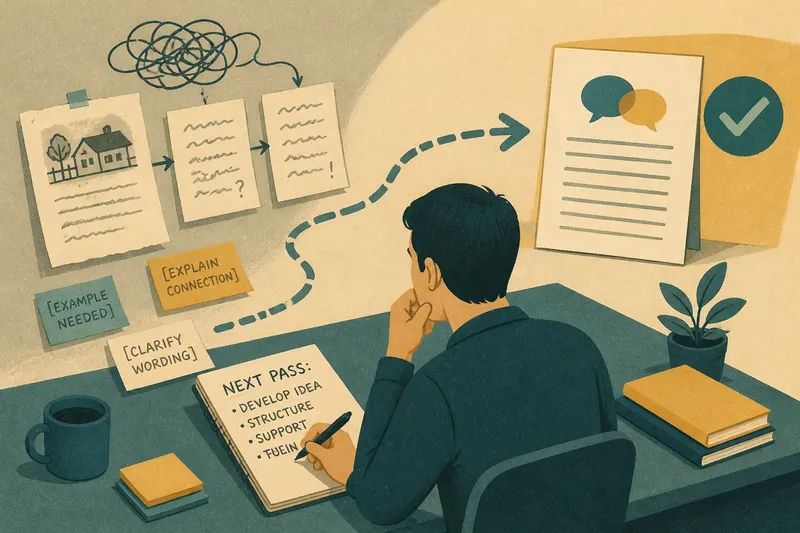
You replace “the room felt unfamiliar” with “the room was unfamiliar,” then spend a few minutes comparing “dim” with “dark.” The sentence sounds smoother, but the draft still has no clear point. Editing too early can turn a discovery session into a search for the right wording.
The useful question is not whether to revise, but what kind of decision the draft needs next. Keep sentence polish in service of a larger purpose: helping a reader follow the idea you have chosen to develop.
Why can editing too early shrink an idea?
Early drafting often reveals the subject as you write. A detail may lead to a question, or two observations may connect in a way you did not expect. If you keep stopping to refine each sentence, you give less attention to those larger relationships.
Polished wording can also make a passage feel settled before you have decided what it contributes. An appealing opening may draw attention away from a stronger point later in the draft. The problem is not careful language; it is treating local improvements as a substitute for deciding what the whole piece is doing.
That distinction matters because different kinds of revision answer different questions. Developmental revision considers the central point, structure, and supporting material. Line editing improves clarity and rhythm. Copyediting checks grammar, consistency, and mechanics. Fixing a comma will not resolve a missing connection between ideas.
How can you tell when wording has taken over?
A single pause to correct a typo is not a problem. Look instead for repeated choices that keep you from developing the draft:
- The opening keeps changing: If you have rewritten it several times but cannot state what the piece is examining, then write a one-sentence description of the subject and leave the opening alone for now; otherwise, continue drafting.
- Every sentence seems equally important: If you cannot tell which thought should lead, then mark the passages that seem central and compare them before polishing; otherwise, revise the sentences that support the clear main point.
- You remove questions as soon as they appear: If a question points to a genuine issue the piece needs to address, then keep it as a prompt or develop an answer; if it is merely a note to yourself, move it to a comment.
- You keep reopening the thesaurus: If several word choices seem possible but none changes the meaning, then choose a plain temporary phrase and continue; if the choice affects the claim, note the distinction that needs deciding.
- One section is polished while the rest is missing: If later material could change that section’s role, then label it “provisional” and draft the missing parts; if its purpose is already clear, leave it and move on.
- A confusing note blocks the next paragraph: If you no longer understand what the note means, then add a brief explanation now; if the meaning is clear and only the wording is clumsy, mark it for a later pass.
These checks help separate a real obstacle from a tempting detour. The aim is not to ignore every flaw. It is to spend attention on the decision that will help the draft advance.
How can you give each pass a clear job?
Before opening a document in Google Docs or another editor, write down what you want the next pass to accomplish. A short note beside the keyboard works just as well. Naming the task makes it easier to notice when you have switched from developing the idea to polishing its language.
- Write the question the draft is addressing. Use a plain sentence, even if it is provisional. This gives you a subject to test as you add material.
- Draft material that helps answer it. Add observations, examples, objections, and rough transitions. Put a note such as “[clarify wording]” beside a sentence that needs attention but does not prevent you from continuing.
- Mark a decision instead of settling it by accident. If a phrase could mean two things, note both readings in a comment. When the distinction changes the idea, decide what you mean before making the sentence elegant.
- Read for the developing point. Once you have enough material to see possible connections, write a brief note about which one seems most useful and what remains unresolved.
- Revise from large choices to small ones. Check the main point and sequence first, then assess each example, and only then refine sentences and mechanics.
Say you are writing about handwritten replies on a neighborhood notice board. Your starting material is a crooked flyer and two reply notes. As you draft, you notice that each reply addresses the previous note rather than the flyer. You write down that distinction, keep the flyer description rough, and make the exchange between the replies the center of the draft. On a later pass, you decide the flyer still helps orient the reader, but deserves less space than the conversation it prompts. The resulting structure gives the reader the same concrete setting while making the exchange—not the description—the main idea.
What should you do when a draft feels too rough?
Identify what is rough before rewriting. A note that no longer makes sense needs clarification. Two possible directions may need separate paragraphs so you can compare what each reveals. A clumsy sentence that does not block your thinking can wait.
Placeholders make missing work visible without disguising it. Use “[example needed]” where an illustration belongs or “[explain connection]” where the relationship between two points is unclear. These notes create specific revision tasks. They are more useful than polishing the sentences around a gap.
If you return to the same passage repeatedly, ask what job it needs to perform. It might introduce a concern, provide an example, qualify a claim, or connect two observations. Once that job is clear, you can decide whether the passage belongs and what language it needs.
When is early feedback useful?
Ask someone for feedback when you can name the question you want answered. A rough draft can be ready for an early reader if you want to know whether its central idea comes through. Try asking, “What do you think this draft is building toward?” rather than asking for a general reaction.
Keep the request focused on the stage of the work. If you are checking the idea, ask the reader to describe what they understood and where the thread became hard to follow. Save detailed sentence corrections for a later pass unless a confusing phrase changes the apparent meaning.
Feedback is information to consider, not an instruction to accept every edit. If a reader cannot identify the central point, look again at the draft’s structure. If the point comes through but a phrase is unclear, decide whether the wording or the surrounding explanation needs attention.
What should you do with drafting and revision questions?
Should I fix a typo while drafting?
Correct it if it changes the meaning or keeps interrupting your train of thought. Otherwise, mark it and continue so the correction does not become a search for more polished phrasing.
How do I know whether the main idea is clear enough?
Describe the draft’s point in one plain sentence, then check whether the sections contribute to it. If the sentence keeps changing as you draft, keep developing the material before focusing on line edits.
Can I draft and revise in the same session?
Yes. Finish a stretch of drafting, note what the new material adds or changes, and choose whether your next pass should address structure or wording.
What should I do with a polished line I later cut?
Move it to a separate section of the document or a notes file, then continue revising the piece. Keep the line only if it supports the current direction; a strong sentence does not have to stay in a draft that no longer needs it.
How can you polish without losing the point?
Before revising a sentence, identify what it contributes. If it states the central idea, clarity matters. If it offers a vivid detail, check that the detail supports the point rather than competing with it. Save a copy before substantial restructuring so you can recover material if a later decision changes.
Use separate passes: first for structure, then for clarity, then for rhythm and correctness. This order helps each sentence-level edit serve the argument or idea around it. The phrase editing too early describes a timing problem, not a ban on revision. When a line resists improvement, leave a note about the larger decision it depends on and return after that decision is clear.