The Detail You Almost Missed: Turning Observation into a Starting Point
Turn observation into a creative question by choosing a telling detail, checking its context, and shaping a focused prompt you can actually explore.
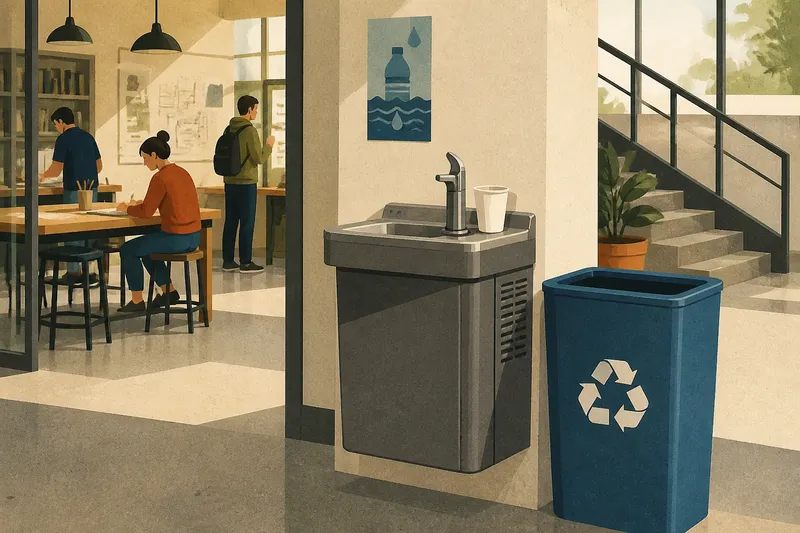
You notice a paper cup left beside a drinking fountain, though a recycling bin stands a few steps away. That small mismatch can become a creative starting point if you treat it as an observation, not an explanation. Turning observation into a creative question means gathering a few precise details, spotting a connection or tension among them, and asking what the pattern might let you explore.
The useful question is not “What does the cup mean?” It is “What might explain this particular choice, and how could I explore that without pretending I already know?” Your next move depends on what you have noticed: a single striking detail, several related details, a contradiction, or a scene that still feels vague. Sorting by situation helps you avoid turning a thin impression into a grand claim.
What counts as a useful observation?
An observation describes something a person could point to, hear, or otherwise check in the setting. It stays close to what happened and leaves room for more than one explanation. “The cup is beside the fountain” is observable. “People are careless about recycling” is an interpretation: it assigns a cause and a judgment that the cup alone cannot establish.
Useful observations are specific enough to revisit. Note the object, action, setting, and any immediate contrast that makes the moment stand out. Keep the record brief: one or two sentences are usually enough to preserve the detail without burying it in commentary. A pocket notebook, a voice memo, or a notes app can all work; choose a method you can use without interrupting the scene.
Do not collect details merely because they are vivid. A bright color or unusual object may catch attention but have no relation to the question you want to develop. The aim is not to gather the most material. It is to preserve enough context to ask a fair, workable question.
Which situation are you in?
Have you noticed one striking detail?
Stay with that detail if it has a clear setting and you can name what makes it unexpected. Write down what you can verify, then ask what information would help distinguish among possible explanations. This fits when the observation is fresh but you do not yet have enough material to claim a pattern.
Do several details seem connected?
Group them only when they share a concrete feature, such as the same location, recurring action, or kind of object. State the shared feature before proposing a meaning. This fits when repetition may be meaningful, but the observations still need a common frame.
Do two details seem to conflict?
Keep both details in view instead of choosing one as the “real” story. Ask what conditions might allow each to be true. This fits when the mismatch itself is the most interesting part, such as a sign encouraging one behavior while the space makes another behavior easier.
Does the scene still feel vague?
Return to the setting and record what a camera or microphone could capture, rather than adding mood words such as “awkward” or “careless.” If you cannot revisit it, mark what you do not remember. This fits when your first account relies more on impression than on details you can describe clearly.
How do you keep a note close to what happened?
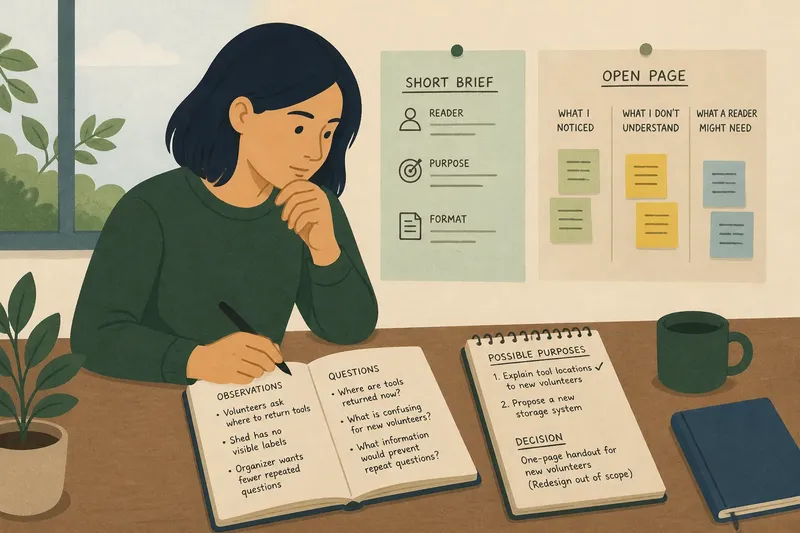
Separate the record from your interpretation. A simple two-column note can help: put visible or audible details on one side and possible explanations on the other. Keep a question mark beside explanations you have not checked. This small distinction makes it easier to revise your idea when a new detail changes the picture.
For example, imagine you are developing an idea about how people use a shared studio. You note that two scissors lie beside a cutting mat, while the labeled drawer nearby is closed. Your observation is the placement and the closed drawer; “people avoid putting tools away” is a possible explanation, not a fact. You could ask, “What makes the mat a more convenient place for scissors than the labeled drawer?” The question stays anchored to the scene and invites more than one answer.
If the setting involves other people, be considerate about what you record and share. Avoid collecting identifying details that do not serve the creative question, and follow the relevant permissions and privacy expectations of the place. An observation can be useful without turning someone else’s private moment into material.
How can tension become a workable question?
Tension is a difference that asks for attention: an object is available but unused, a stated purpose clashes with a visible habit, or two people respond differently to the same setting. It does not prove that anything is wrong. It gives you a relationship to examine.
To form a question, name the two sides of the tension, then choose a scope you can explore. “Why do people ignore public instructions?” assumes a broad pattern and a motive. “What makes this sign easy to miss from the bench?” points toward a specific relationship among wording, placement, and a viewer’s position. The second question could guide a sketch, a small design proposal, or another observation without claiming to explain everyone.
Use these checks to narrow the question:
- Can you point to the details? If not, gather clearer observations or make the uncertainty explicit.
- Does the question assume a cause? Replace a presumed motive with wording that allows several explanations.
- Can you explore it with the access and materials you have? If not, narrow the setting or ask about a visible feature instead.
- Would a different answer change what you make? If every answer leads to the same concept, the question may be too broad or decorative.
These checks are not a scoring system. They help you decide whether to gather another observation, keep the question open, or begin shaping a concept from what you already know.
How much evidence is enough to begin?
Begin when you can state the observation plainly, identify what remains uncertain, and describe a small next move. That next move might be comparing another moment in the same setting, sketching two possible responses, or asking someone a neutral question if that is appropriate. You do not need to settle every explanation before making a first concept.
Gather more observations when the detail could mean opposite things and you have no way to choose between them. For instance, a closed drawer might be hard to open, reserved for a different tool, or simply overlooked. A second observation about the drawer’s use could clarify the design problem; guessing at users’ motives would not.
On the other hand, do not keep collecting notes because a perfect pattern might appear. If your question is specific and a small creative response could help you learn what matters, make that response provisional. A rough drawing or a short description can reveal whether the question leads somewhere productive.
What should you do when an observation surprises you?
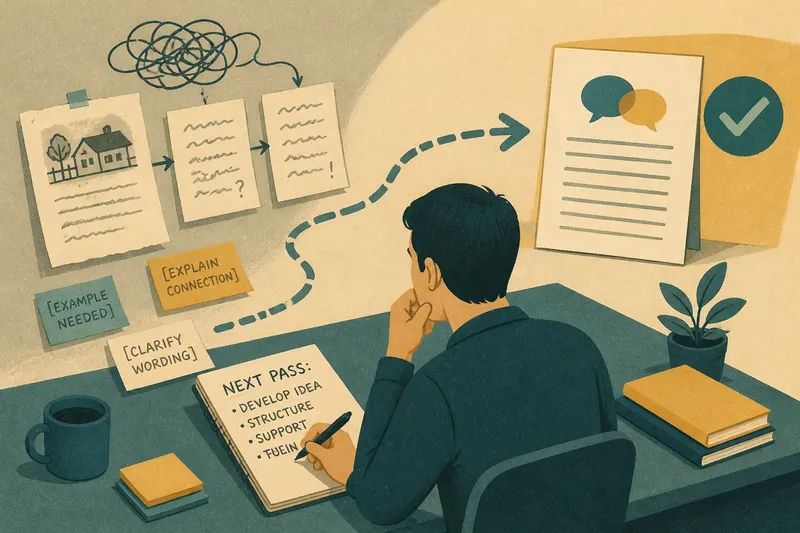
First, record the detail in neutral language. Then note your immediate explanation separately, along with at least one plausible alternative. Finally, ask what you could observe next that would make the alternatives easier to distinguish. This keeps surprise useful without letting it harden into certainty.
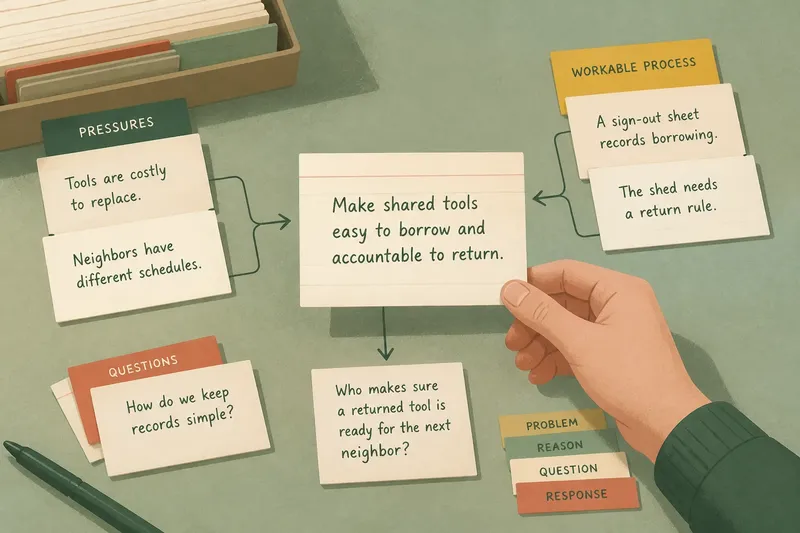
For an early concept, present the chain clearly: what you noticed, what tension you see, what question follows, and what you might explore next. Say which parts are direct observations and which are interpretations. That clarity gives a reader room to respond to the idea itself rather than having to guess how you reached it.
When you turn observation into a creative question, the detail you nearly missed does not need to carry a sweeping message. It only needs to point toward a worthwhile next inquiry. Keep the original note nearby as the concept develops; it can remind you what the question came from when later ideas begin to drift.