A Two-Minute Introduction to an Unfinished Idea
A two-minute introduction to an unfinished idea makes a rough concept easier to picture, so listeners can follow its purpose without mistaking it for a finished plan.
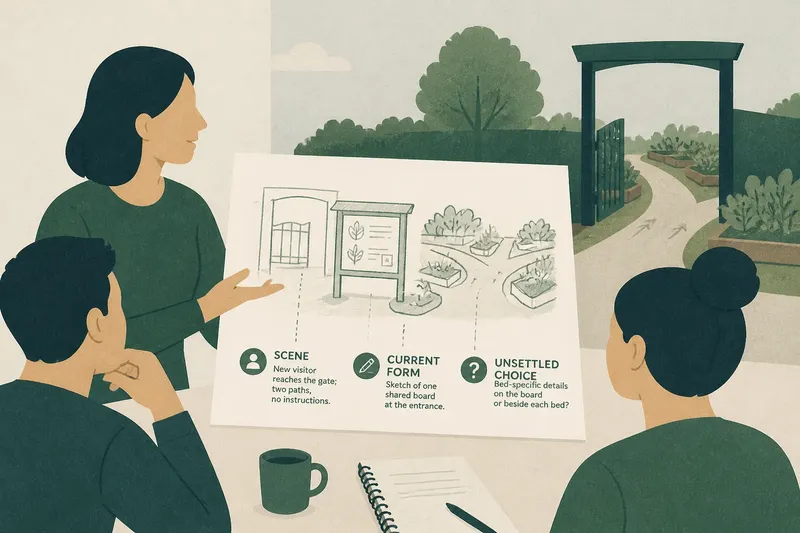
You have a rough sketch on the table and little time to explain it. A two-minute introduction to an unfinished idea should help listeners picture what they are seeing, without dressing the work up as a finished proposal. Give them a clear entry point: the situation behind the idea and the form it is taking so far.
What makes an unfinished idea easy to picture?
Start with a specific moment, object, or tension. “I’m looking at signs in community gardens” names a topic. “A first-time visitor reaches the garden gate and cannot tell which beds are open for planting” gives the listener a scene.
Next, name the form of the work. It might be a sketch, a draft paragraph, a service concept, or two possible layouts. This detail lets people imagine the idea as something they can see or read, rather than as an abstract intention.
Keep the explanation close to what exists now. If you have a drawing, describe its visible parts. If you have only a sentence, say what that sentence proposes. Avoid promising what the project will eventually become.
How much context belongs in the introduction?
Include only the background needed to understand the idea’s starting point. A listener does not need the full history of how you arrived there. They do need to know what the current version responds to and what makes its form relevant.
For example, “The garden has many beds” is background; “visitors currently meet several unlabeled paths at the entrance” connects the setting to a possible sign system. Use plain language and replace insider terms with a short explanation when they are necessary.
Then state what is still unsettled in a direct sentence. “I have not decided whether the instructions belong on one board or beside each bed” is clearer than an apology about the idea being rough. Naming an open choice helps listeners understand why the work is still taking shape.
What can a clear two-minute introduction contain?
Use these concrete checks while preparing. For each one, decide whether to keep the detail or replace it with a clearer one.
- Starting scene: Check whether the opening names a person, place, or situation. If listeners can picture it, keep it; if not, add a concrete detail, such as a visitor at a garden gate.
- Current form: Check whether you say what exists now, such as a sketch or draft. If the form is clear, keep it; if not, name the object or format you are showing.
- Visible components: Check whether you describe the parts a listener can see. If the parts make sense, keep them; if not, point to one feature and explain it in ordinary words.
- Unsettled choice: Check whether you identify what remains undecided. If the choice is specific, state it; if it is broad, narrow it to the next visible decision.
- Relevant context: Check whether each background detail helps explain the current form. If it does, keep it; if it does not, leave it out of the opening.
- Plain wording: Check for unexplained project terms or vague phrases. If a listener could understand them without your explanation, keep them; if not, define them or choose simpler wording.
Imagine you have a rough map for a community garden entrance. Its starting inputs are a gate, a fork in the path, and a blank page with a large board drawn beside the gate. First, describe the scene: “A new visitor reaches the gate and sees two paths but no planting instructions.” Next, name the current form: “I have sketched one shared board at the entrance.” Then describe what is unresolved: “I have not decided whether bed-specific details belong on the board or beside each bed.” The resulting introduction gives listeners a scene, a visible concept, and an honest account of its present boundary.
How can you keep the explanation concise?
Before speaking, choose one sentence for the situation, one for the current form, and one for the unsettled choice. Say them aloud and remove any detail that does not help a listener picture those three things. If a sketch or draft carries part of the explanation, point to it rather than narrating every mark.
Let the listener see the work before adding optional background. A simple sheet of paper, a printed draft, or a single slide can make an early concept more tangible. Keep the material you show aligned with what you describe; an unrelated image or a crowded slide can make a small idea harder to follow.
What questions can help you prepare?
What if the idea has no finished name?
Use a plain description of its form or purpose instead of forcing a title. “A draft map of the garden entrance” tells listeners more than a label they have not heard before.
Should I show more than one direction?
Show alternatives only if comparing them helps explain the idea’s current shape. If each option needs a long explanation, choose the one that best represents the work so far and mention the other briefly as an open possibility.
How should I explain a rough drawing?
Point to the feature that matters and describe what it represents. If a line or symbol could be read in different ways, identify its meaning rather than assuming the listener will infer it.
What if the concept changes while I am explaining it?
Describe the version in front of you, then name the part that may change. This keeps the explanation accurate while allowing the idea to remain unfinished.
How should the introduction end?
Close by stating what the work currently consists of and what remains open, without trying to turn the moment into a sales pitch. For the garden map, that could mean ending with the entrance-board sketch and the unresolved choice about where detailed instructions belong. The listener leaves with a clear picture of the concept’s present form and its boundary.
A two-minute introduction to an unfinished idea is useful when its language matches the actual state of the work. Name the scene, describe the artifact or format, and identify the unsettled part. That gives the concept a clear shape without implying that its final form has already been chosen.